


LOCALPRO · HOMEOWNER ARTICLES
Painting Siding and Trim: Mixed Materials
Painting siding and trim on a mixed-material exterior requires a surface-by-surface plan, not one coating chosen for the whole house. Identify each component, its material, existing finish and condition; then agree on preparation and the appropriate system for the included surfaces. Coordinate colors together while keeping manufacturer-specific requirements and unpainted components separate.
For a Litchfield County property with an addition, repairs or mixed finishes, record those differences as questions to resolve—not reasons to repaint everything. The aim is to define the right work for each included part while keeping the overall appearance coherent.
Published by LocalPRO House Painters
Identify components before choosing products
Identify components by location and function: siding on the front elevation, corner boards, window trim, porch posts or a replaced section beside the garage. Then add the material and finish only when known.
Avoid identifying a substrate from its texture alone. James Hardie, for example, supplies both primed siding and factory-applied ColorPlus finishes, and some of its products resemble wood. Its manufacturer FAQ illustrates why product identity and finish history matter. It is not a specification for unidentified siding on your house.
| Component | Evidence worth gathering | Decision to leave open until reviewed |
|---|---|---|
| Original siding | Existing records, known coating, visible condition | Preparation and suitability for the intended finish |
| Replacement boards | Invoice, product label or installer information | Whether their treatment differs from adjacent material |
| Window and corner trim | Material, exposed faces and previous repairs | Included surfaces and coating requirements |
| Factory-finished components | Manufacturer, product and care documents | Permitted maintenance or refinishing approach |
| Adjacent unpainted details | Photographs and identification | Protection and explicit exclusion from painting |
An unknown entry is useful. It tells the person reviewing the project what still needs identification; it is not permission to substitute a familiar product.
Keep condition and material in separate columns
Keep condition and material separate because knowing one does not settle the other. Two wood components can have different existing finishes or concerns. Two visually similar boards may not even be the same material.
Describe visible differences: an exposed edge, a replacement patch, peeling near one opening or an area that stays shaded. Do not diagnose the cause from orientation or a county label. Ask which conditions need investigation or repair before coating and who is responsible for that work.
If existing paint may be disturbed on a pre-1978 home, discuss lead-safe requirements before preparation. The EPA’s homeowner guidance is a starting point, not proof that a particular coating contains lead.
Coordinate the appearance without forcing one system
Coordinate the appearance through agreed color, finish and boundaries. Do not assume that using the same color name means using one product on every component.
Ask the painter to identify the proposed system for each included surface and consult the actual manufacturer’s current instructions where a manufactured component is involved. Record which documents were used, especially when a previous owner left product information. If the material remains unidentified, settle that uncertainty before treating the specification as final.
Review the siding beside the trim, not as isolated color chips. Keep any component that will remain unchanged in the comparison so the proposed work can be judged against the real exterior.
Make the estimate follow the component record
An estimate is easier to compare when it names the parts being painted, the preparation included and the work outside the scope. “Exterior painting” should not silently include gutters, roofing, replacement carpentry or every surface visible in a photograph.
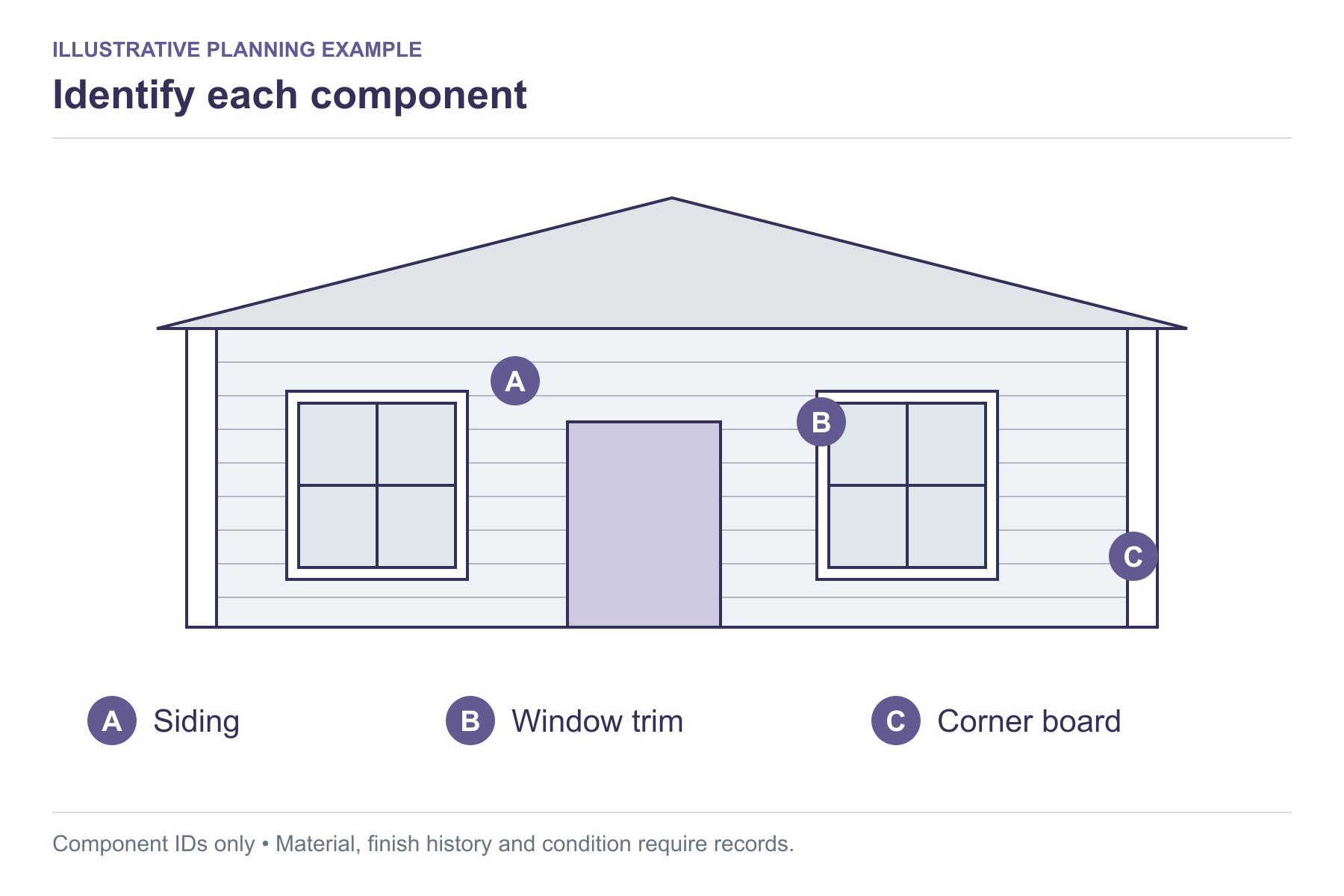
Use a simple identifier on your photographs and notes—front siding A, window trim B, replacement section C. Ask for clarification wherever an estimate combines items that need different decisions.
Does mixed material mean multiple colors?
No. A coordinated palette can use different coating systems. Material suitability and the visual color plan are separate decisions.
Should every component be repainted at the same time?
Not automatically. Review its condition, compatibility and relationship to the selected work. Keep sound excluded components clearly marked.
Bring the exterior inventory to the discussion
Review LocalPRO House Painters’ exterior painting services, then request an estimate with component photographs and any product records. Confirm Litchfield County availability by address and project type before arranging the next step.