


LOCALPRO · HOMEOWNER ARTICLES
Painting or Refinishing Floors First?
Painting or refinishing floors first depends on the work involved: sanding, ceiling preparation, sprayed trim and final touch-ups need different handoffs. Agree on dust-producing work, floor protection and the final painting visit before either contractor fixes a start date. The flooring professional should confirm when the actual finish can accept coverings, ladders and work traffic.
The objective is not to make one trade “go first.” It is to avoid sending the next trade into a surface or room that is not ready for it.
Published by LocalPRO House Painters
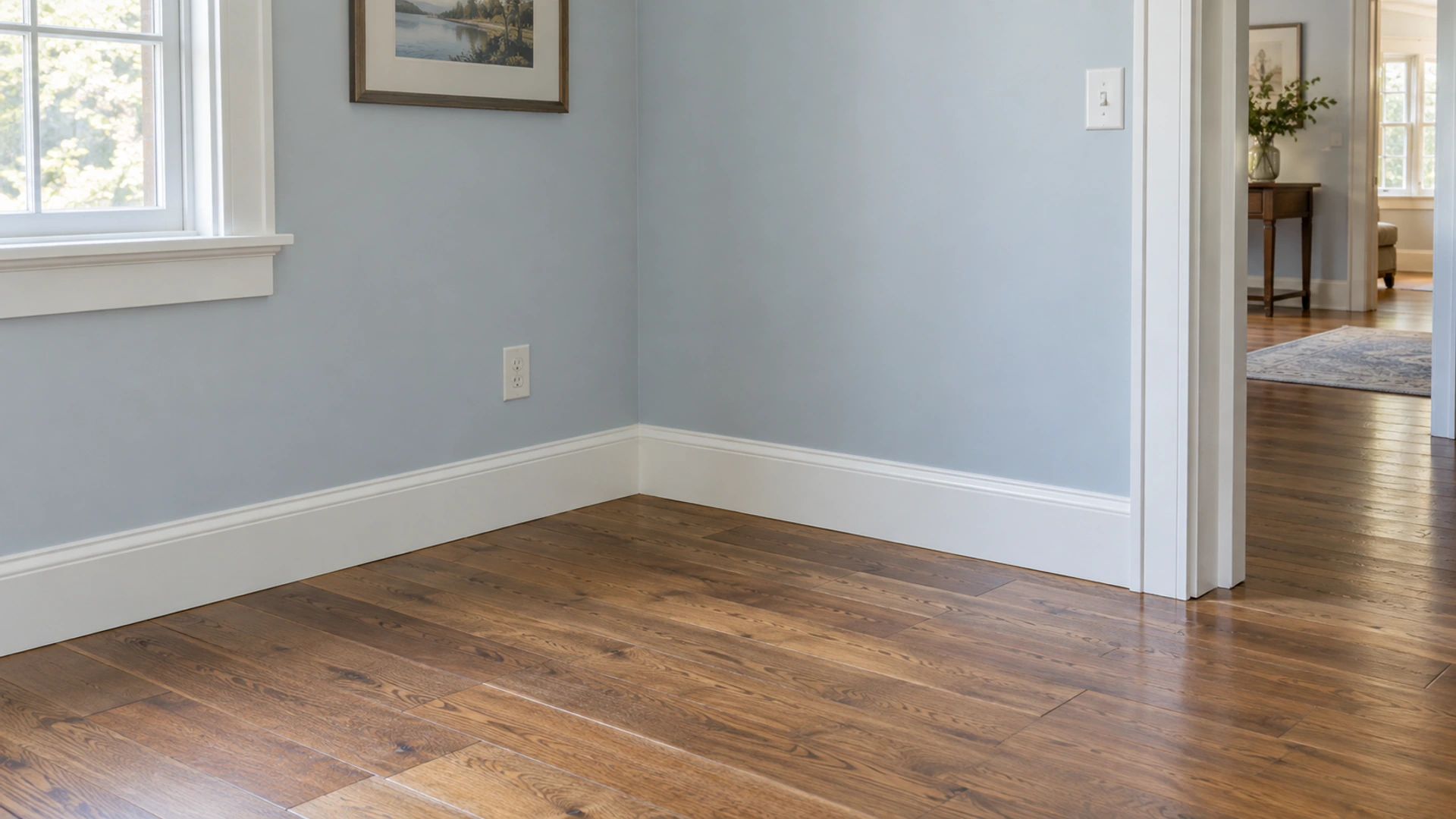
Divide “painting” into the work actually involved
Ceiling work, wall preparation, spraying trim and a small final touch-up do not create the same protection requirements. Likewise, installing a factory-finished floor is not the same operation as sanding and finishing an existing wood floor on site.
Specialists describe different sequences. National Floors generally places most painting before final floor finishing, while Kimminau Floors separates ceiling, trim, cabinet and wall work when explaining its approach. That difference is a reason to coordinate your project—not to apply either sequence as a universal rule.
Use a handoff plan instead of competing schedules
| Work to coordinate | Question for the team | Decision to record |
|---|---|---|
| Dust-producing preparation | Which surfaces and rooms must be prepared before finish work? | Cleanup and room-release responsibility |
| Ceilings or sprayed details | What needs protection beneath and beside the work? | Approved sequence and protection method |
| Floor treatment | When may the finished floor receive traffic and coverings? | Instructions from the flooring professional and product system |
| Baseboards and other trim | Is it staying, being removed or being replaced? | Who completes installation and finish work |
| Final corrections | Which surfaces will be reviewed after both trades finish? | Included correction scope and responsible contractor |
Do not assume that a covering, adhesive tape or ladder protection is suitable for a new floor simply because it was used on an older one. The flooring professional should confirm protection and return-to-use requirements for the actual finish.
Identify the return visit before it becomes a disagreement
If the sequence calls for painting to return after floor work, include that visit in the discussion from the start. Specify what it is intended to accomplish and what happens if additional damage or a changed scope is discovered.
Avoid a vague agreement that someone will “touch everything up.” A baseboard correction and a damaged wall finish are different tasks. Describe the affected area, expected appearance and review process instead of assuming all later corrections are included.
Keep painting and flooring responsibilities distinct
Agree on floor treatment, protection and return-to-use requirements with your flooring professional. Define the painted surfaces and contractor handoffs separately.
Use LocalPRO’s interior painting page to identify the painted surfaces, and the project process overview to understand the painting discussion. Bring the flooring contractor’s requirements into that discussion rather than asking the painter to guess them.
Is a floor that feels dry ready for painting traffic?
Do not decide by touch alone. Ask the flooring professional when the selected system allows coverings, equipment and the planned traffic. A generic waiting period cannot certify your floor.
Can the two contractors work in different rooms?
Possibly, but shared access, dust, protection and finish conditions can still connect the rooms. Agree on work zones and handoffs before treating them as independent.
Coordinate the scope before choosing dates
For a home in Fairfield County, include the address, painted surfaces and planned flooring work when you request a painting estimate. The next useful step is a coordinated scope, not an automatic promise that painting must always happen first or last.