


LOCALPRO · HOMEOWNER ARTICLES
Painting an Open-Plan Home: Color Boundaries
Painting an open-plan home starts with deciding where each color begins and ends. Mark continuous walls, door returns, columns, ceilings and trim on photographs taken from the main viewing positions. Compare a continuous palette with deliberate color changes at identifiable boundaries, then approve samples together before turning the plan into a painting scope.
Start with the surfaces you can see together. A room name is not necessarily a physical stopping point.
Published by LocalPRO House Painters
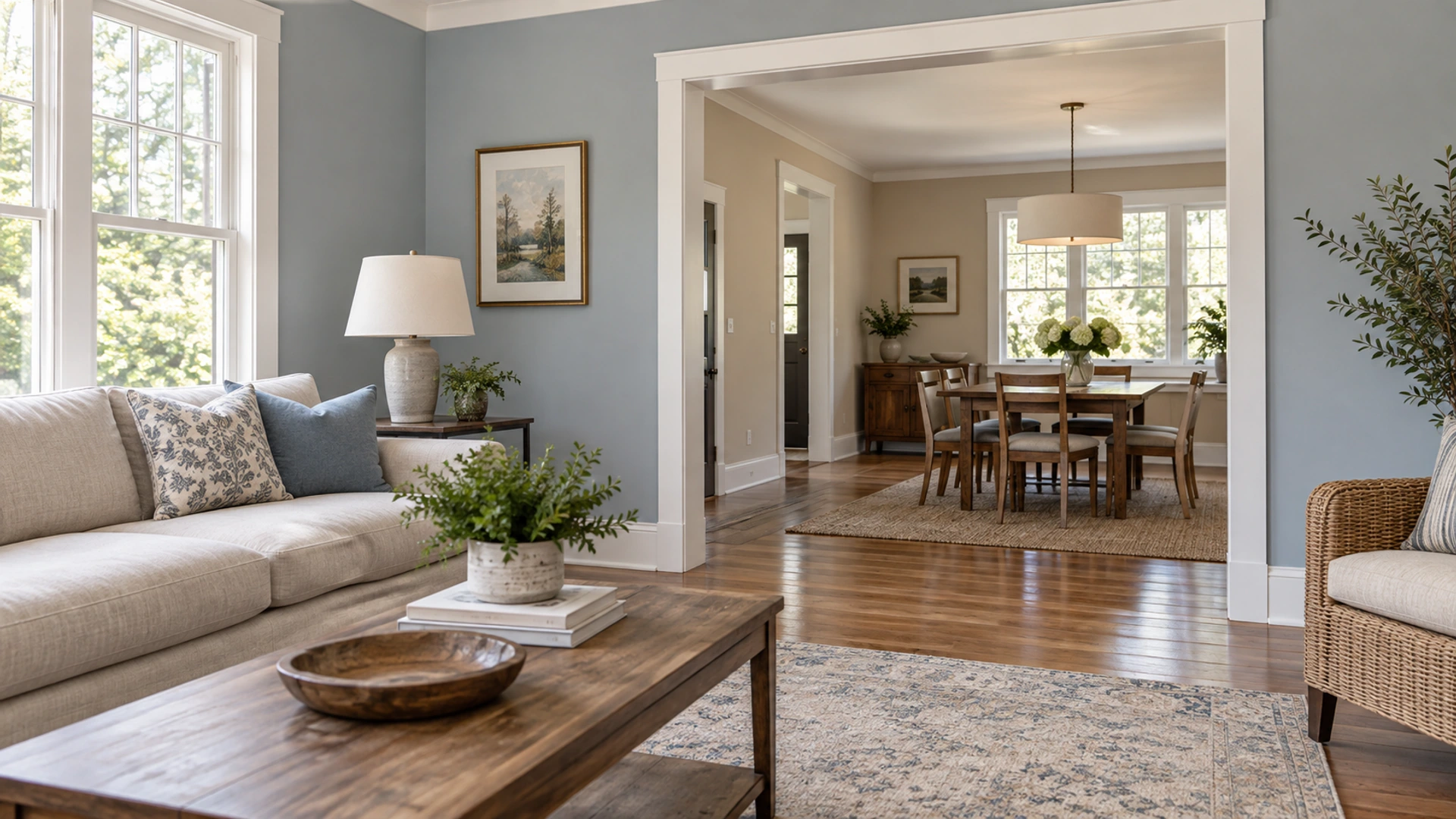
Read the space from everyday viewing positions
Stand at the entrance, at the seating area and where the kitchen opens into the rest of the space. Note which walls, ceilings, columns and trim are visible together. A boundary that looks clear on a floor plan may be less apparent in the actual room.
Identify fixed elements that are staying, such as flooring, cabinetry and substantial trim. Those elements are part of the composition even when they are outside the painting scope.
Use the architecture to test a transition
| Situation | Question to resolve | What to document |
|---|---|---|
| One continuous wall spans two areas | Does it need one treatment, or is there a deliberate designed break? | Exact start and end of each color |
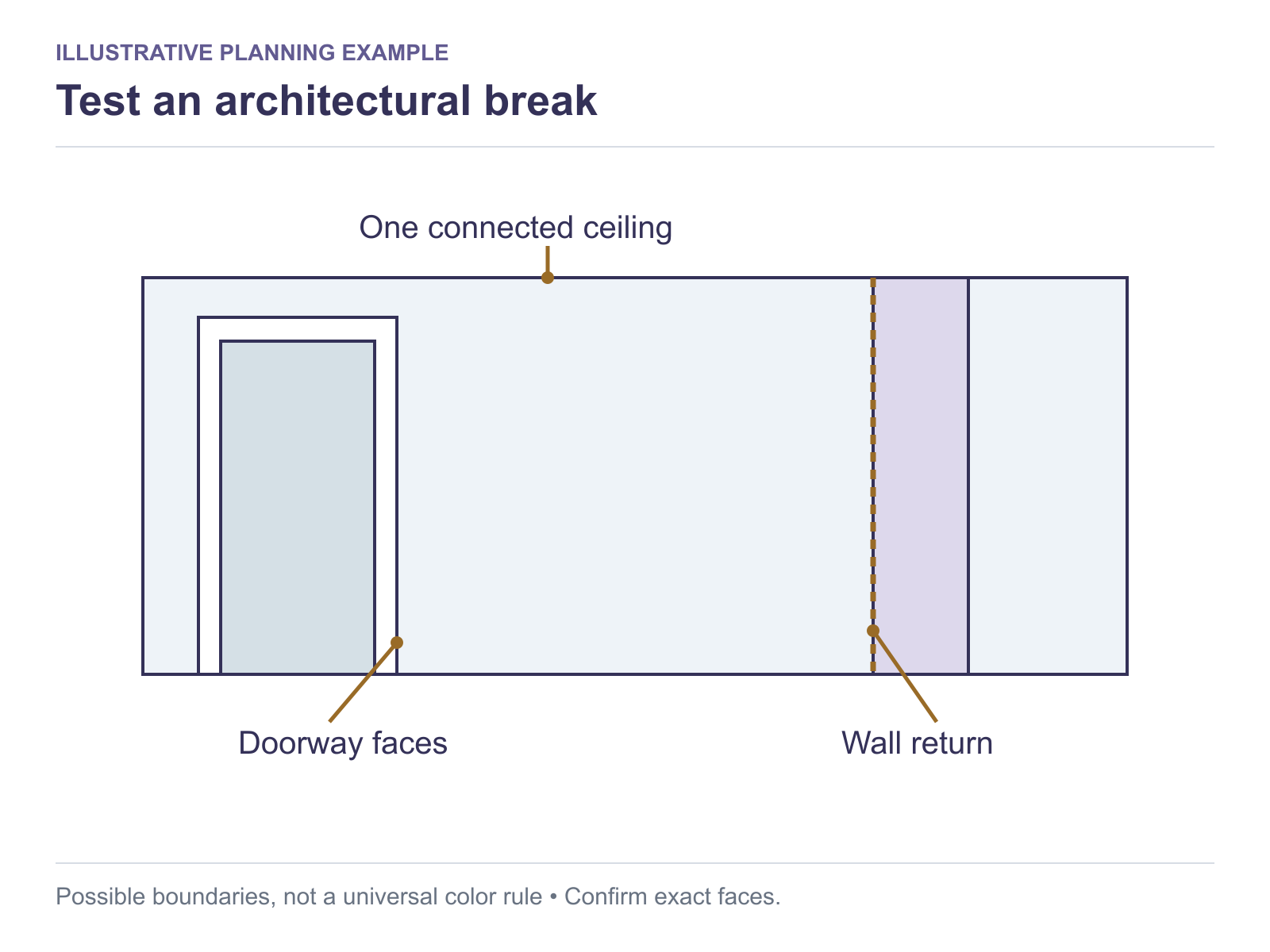
| A doorway connects spaces | Which faces and returns belong to each side? | Marked photograph of the transition |
| A column or projecting element interrupts a wall | Is the element an accent or part of the background? | Treatment of all visible faces |
| Ceiling areas connect | Is the ceiling continuous in color and finish? | Ceiling scope independent from wall scope |
| Existing trim continues throughout | Will it stay consistent while walls change? | Included and excluded trim surfaces |
These are design questions, not rules that every room must follow. The useful outcome is a visible, agreed boundary that a painter can identify without guessing.
Choose a strategy before choosing more colors
One continuous wall color may support visual continuity. Different colors may help distinguish areas when their boundaries are intentional. An accent can work as a focused decision rather than requiring every adjoining surface to change.
Compare those alternatives in the actual space. Do not select additional colors just to give each room a separate identity. Equally, do not assume an open plan must always be monochromatic.
The LocalPRO Color Helper supports color and finish exploration. This step adds something different: deciding where the selected treatment begins and ends.
Review samples as a group
Look at proposed wall colors beside the trim and fixed materials that will remain. Benjamin Moore’s trim-color guidance discusses relationships between walls, trim and lighting. It is a source of considerations, not a prescription for your room.
Record the approved product and color separately for walls, trim and ceilings. The same color name does not necessarily mean the same product or finish is appropriate on every surface.
Make a boundary sheet for the painting discussion
Use a simple room sketch and a few photographs. Label each surface, mark the proposed color transitions and note areas that remain unchanged. Add the approved color identification when it is available.
If a boundary is still undecided, say so before the work is scheduled. It is easier to resolve a marked photograph than to rely on descriptions such as “paint the dining area blue” when the dining area shares a wall with the kitchen.
Can adjoining spaces use different colors without trim between them?
They can, but the transition should be a deliberate visual decision. Ask how it will look from the main viewing positions and specify the exact boundary.
Does the ceiling have to change with the walls?
No automatic rule requires that. Review ceiling condition, continuity and the intended composition separately, then include the chosen work explicitly.
Turn the color plan into a defined scope
Use the interior painting overview to review the surfaces involved. For your Fairfield County home, request a painting estimate with photographs and the decisions already made. A clear boundary plan helps make the intended result understandable before painting begins.