


LOCALPRO · HOMEOWNER ARTICLES
From Dark Walls to a Lighter Room
From dark walls to a lighter room, make two decisions: approve the lighter color in the room’s actual light, then agree on the preparation and coating system needed to achieve it. Compare physical samples beside the trim and flooring that will stay. Ask about primer and coverage separately; a pale color choice alone does not specify either.
Separate two decisions: Is this the color you want, and what work is needed to produce the agreed finish? Approving one does not automatically settle the other.
Published by LocalPRO House Painters
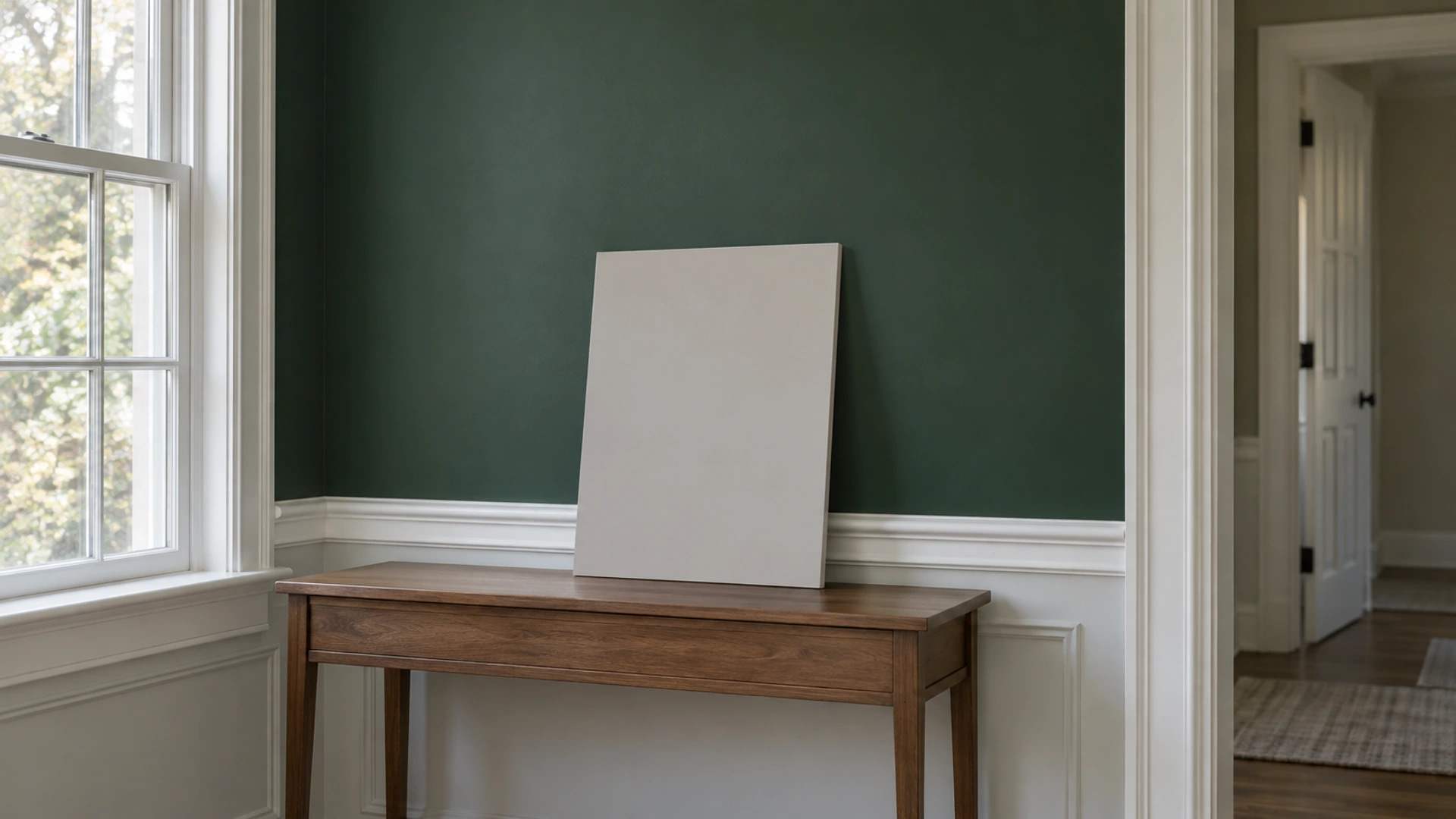
A color sample and a coverage decision answer different questions
A sample helps you judge a color in the room. It does not, by itself, define preparation or guarantee how a complete wall will look after application.
Compare the proposed color beside flooring, countertops, trim or other surfaces that will remain. Look at it from the places where you normally use the room. Keep the lighting conditions in mind rather than assuming a photograph captures the full experience.
The LocalPRO Color Helper can help organize a shortlist. Use it as a starting point; review physical samples before approving the final color.
Record what is changing—and what is staying
| Item | What to note | Why it belongs in the discussion |
|---|---|---|
| Existing wall coating | Known product or finish, if available | Helps the professional assess the proposed system |
| Visible marks or repairs | Location and appearance, without guessing the cause | Color coverage and surface correction are separate issues |
| New color | Approved sample and identification | Prevents a general description such as “warm white” becoming the specification |
| Unchanged surfaces | Trim, ceiling, flooring and adjoining rooms | They remain part of how the new wall color is perceived |
| Review conditions | The room and ordinary viewing positions | Keeps the approval conversation grounded in how the space is used |
Do not use the old color alone to prescribe primer or coats
Dark-to-light is useful information, but it is not a complete coating specification. The surface and selected products still need review. Ask whether separate primer is required and what the proposed system assumes about existing conditions.
Benjamin Moore’s explanation of paint-and-primer products distinguishes product claims from situations requiring additional preparation or primer. Follow the instructions for the actual product rather than treating “paint and primer in one” as permission to omit every other step.
Avoid planning around an unverified promise of one-coat coverage. Conversely, do not assume that every color change requires the same additional layers. The estimate should identify the agreed work and how an unexpected condition will be addressed.
A lighter color will not correct an underlying surface problem
If a mark returns, a repair is unstable or a moisture concern is active, identify the appropriate evaluation before treating it as a color problem. Painting is not a substitute for addressing a continuing cause.
You can help by documenting what you have noticed and when it appeared. You do not need to diagnose it yourself. For an interior painting review, separate the visual result you want from the conditions you need the professional to assess.
Should the trim be repainted when the walls become lighter?
Not automatically. Review the existing trim beside the wall sample first. Include trim because its condition or the intended composition warrants it, not because a wall color change always requires it.
Can the exact result be approved from a screen?
A screen is useful for discussion but is not a physical finish sample. Confirm color identification and the sample process before application.
Bring both decisions to the estimate
Tell LocalPRO House Painters which rooms, surfaces and colors you are considering. For Fairfield County projects, request a painting estimate with the address and photographs of the current surfaces. The aim is a clear finish plan—not simply a different color name.